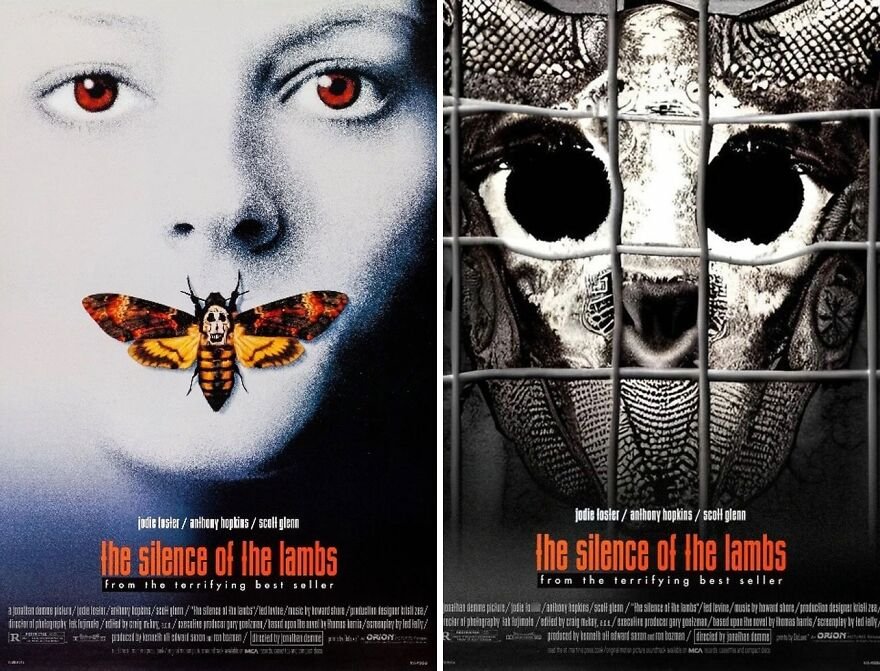
Movie posters—for decades, they were the silent storytellers, the first tantalizing glimpse into a new cinematic world. From the bold strokes of Saul Bass to the meticulously detailed compositions of Drew Struzan, these visual hooks were often masterpieces in their own right, blurring the lines between marketing and fine art. They were essential. But walk into any multiplex today, and you might notice something different: a pervasive sameness, a sea of floating heads, muted color palettes, and predictable layouts. It’s a trend many in the industry call the "lost art" of movie poster design.
Now, imagine a technology capable of not just mimicking those iconic designs, but generating entirely new ones—at lightning speed, with endless variations, and tailored to specific audience demographics. This isn't science fiction; it's the reality of the evolution of AI in movie poster art. Artificial intelligence has entered the creative arena, and its presence is sparking a profound debate: Is AI the harbinger of a new golden age for cinematic visuals, or the final nail in the coffin for human poster artists?
At a Glance: AI in Movie Poster Art
- Efficiency Unleashed: AI dramatically speeds up poster creation, offering countless design options in minutes.
- Data-Driven Aesthetics: Algorithms analyze vast datasets to identify popular visual trends, color schemes, and compositions.
- Beyond Human Limits: AI can generate hyper-realistic portrayals, surreal backgrounds, and abstract scenes that push creative boundaries.
- The Originality Question: AI models learn from existing data, raising concerns about a lack of true originality and artistic nuance.
- The "Lost Art" Dilemma: AI emerges amidst a decline in traditional poster art, threatening human artists but also offering tools for new creativity.
- The Future is Hybrid: The most exciting path forward lies in a collaborative approach, where human creativity guides AI's computational power.
The Golden Age: When Posters Were Art (and Crucial)
To truly understand the impact of AI, we first need to appreciate what came before. For much of cinema history, movie posters weren't just advertisements; they were the primary contact point between a film and its potential audience. Without the instant gratification of trailers on social media or endless clips, a poster had to do a lot of heavy lifting. It needed to capture the film's essence, its genre, its stars, and its mood, all in a single, compelling image.
Artists like Drew Struzan became legends, crafting unforgettable posters for blockbusters like Star Wars, Indiana Jones, E.T., Jaws, and The Thing. His hand-drawn, often painted, masterpieces were rich with detail, emotion, and storytelling. They had soul, a unique artistic fingerprint that resonated long after the film left theaters. These posters weren't just marketing; they were collector's items, celebrated works of art that defined cinematic eras.
The Modern Malaise: Where Did Poster Art Go Wrong?
Fast forward to today, and that artistry often feels like a distant memory. The decline of the movie poster as a unique art form is a complex issue, largely driven by shifts in business and marketing strategies. The era of the visionary artist working hand-in-hand with a director has largely been supplanted by a committee-driven design process.
What we often see now are posters characterized by:
- Crowded Cast Shots: A multitude of characters awkwardly Photoshopped together, often without cohesive lighting or perspective.
- Symmetrical Alignment: A bland, predictable layout that prioritizes showing faces over creating compelling art.
- Bottom-Heavy Title Cards: The film's title, often in a generic font, relegated to the bottom, surrounded by legal text and studio logos.
- Poor Editing & Lack of Originality: A noticeable absence of creative risk, resulting in designs that feel recycled and uninspired.
The reasons are largely financial. Studios favor low-risk options based on extensive market research. If a focus group responds better to a generic floating-head poster than a bold, artistic one, the generic one wins. The role of poster artwork has also diminished, overshadowed by the instant gratification of viral trailers, clips, and merchandise on social media. For many, the poster has become a mere formality, a niche interest for cinephiles rather than a universal artistic statement. Profit, it seems, often devalues genuine artistic work.
Enter AI: A New Dawn or a Creative Twilight?
This brings us to the present moment, where artificial intelligence is not just entering, but actively reshaping the landscape of movie poster creation. For an industry obsessed with cost-effectiveness and efficiency, AI presents a compelling solution.
At its core, AI algorithms analyze vast datasets—millions of existing movie posters, trailers, film genres, and audience preferences. They learn the intricate patterns, visual cues, color palettes, and compositions that resonate with viewers. This deep learning enables an AI movie poster generator to produce stunning, eye-catching designs with minimal human input, often in just a few clicks. Imagine a tool that can instantly churn out dozens, even hundreds, of distinct options, saving filmmakers and production houses immense time, effort, and resources.
AI's Brushstrokes: What Artificial Intelligence Brings to the Canvas
The capabilities of AI in this realm are truly fascinating, pushing the boundaries of what's possible in visual design:
- Rapid Design Generation: AI can create multiple poster concepts in minutes. This speed is invaluable for quick iterations and A/B testing different designs on target audiences.
- Aesthetic and Compositional Analysis: Beyond just generating images, AI can understand and apply design principles. It can suggest optimal color schemes, typography, and compositional layouts based on the film's genre and desired emotional impact.
- Concise & Impactful Taglines: AI isn't limited to visuals. By analyzing film scripts and synopses, it can generate concise and impactful taglines that capture a film's essence in just a few words, a crucial element of any effective poster.
- Hyper-Realistic & Surreal Imagery: AI can transcend photographic limitations. It can create hyper-realistic portrayals of actors, intricate facial features, and expressions that convey emotion with uncanny accuracy. Simultaneously, it can conjure up surreal backgrounds, abstract scenes, or fantastical elements that would be incredibly labor-intensive or even impossible for human artists to create from scratch.
- Creative Experimentation: AI supports boundless experimentation. It can blend seemingly disparate artistic styles, merge different color palettes, or combine techniques in novel ways, opening up avenues for entirely new visual aesthetics that might otherwise go unexplored. This encourages designers to think beyond conventional boundaries.
The AI Paradox: Efficiency vs. Originality
Despite these impressive capabilities, the rise of AI in creative fields comes with a significant paradox. While AI can produce aesthetically pleasing images with unparalleled efficiency, it operates by analyzing and extrapolating from existing data. This fundamental reliance on what already exists can lead to a critical limitation: a potential lack of true originality and profound artistic nuance.
Consider the recent discussion surrounding posters for The Fantastic Four: First Steps. Many viewers and critics pointed out design elements that strongly suggested AI generation—a certain polished sterility, uncanny uniformity, or subtle distortions that hint at algorithmic rather than human creation. This incident ignited concerns across the industry: if we can no longer distinguish human-made art from artificial pieces, what does that mean for the value of art itself?
The inherent challenge is that AI models, by their nature, are pattern-recognition machines. They excel at identifying trends and reproducing them, but they may struggle with the very essence of human creativity: the unexpected, the emotionally charged, the truly groundbreaking concept that breaks existing molds. Artistic nuances—the subtle imperfections, the deliberate choices, the underlying narrative only a human artist can truly embed—can be lost in the pursuit of algorithmic perfection. If the industry leans too heavily on AI simply because it's cost-effective and efficient, there's a very real risk that movie poster creation could indeed become a truly "lost art," devoid of the unique contributions of human vision.
Navigating the New Frontier: Balancing Algorithm and Artistry
The tension between harnessing AI's power and preserving artistic integrity is paramount. The solution isn't to reject AI outright, but to define its role not as a replacement, but as an aid.
Think of AI as a supremely talented assistant, capable of handling the most laborious and repetitive tasks. It can generate initial concepts, refine colors, adjust compositions, and even create variations based on specific parameters. This frees up human artists to focus on the higher-level creative thinking: concept development, emotional storytelling, infusing the poster with unique vision, and ensuring the final piece truly captures the soul of the film.
Best Practices for a Hybrid Approach:
- AI for Ideation, Human for Refinement: Use AI to brainstorm a multitude of initial concepts quickly. Then, human designers can select the most promising ideas and inject their unique artistic vision, refining details, adding personal touches, and ensuring emotional resonance.
- Focus on the "Why": AI can generate the "what," but human artists provide the "why." They understand the film's narrative, its characters' motivations, and the emotional journey the audience is meant to take. This understanding informs artistic choices that AI alone cannot replicate.
- Ethical Sourcing of Data: To mitigate concerns about lack of originality, future AI models should be trained on diverse, ethically sourced datasets, potentially incorporating more abstract art or less commercially driven visual styles to broaden their creative potential.
- Copyright and Attribution: Clear guidelines on copyright and attribution for AI-assisted works are crucial. When is a piece truly "human-made" versus "AI-generated"? This requires careful consideration.
The true value of art, after all, comes from the artist's unique contribution—the choices they make, the stories they tell, and the emotions they evoke—not just from aesthetically pleasing images.
Beyond the Pixels: The Future of Movie Poster Art with AI
The future of movie poster art with AI is not a binary choice between human or machine; it's a dynamic interplay. Advancements in AI are happening at a breathtaking pace, promising even more sophisticated and nuanced capabilities. We can expect to see:
- More Adaptive AI: Models that learn a specific artist's style and assist them in creating variations within that style, rather than just generic outputs.
- Interactive Design: Tools that allow filmmakers and artists to verbally describe their vision, and AI instantly generates visual concepts in real-time.
- Personalized Posters: Imagine AI generating slightly different posters for different demographics, or even for individual viewers based on their viewing history and preferences (though this raises ethical questions about filter bubbles).
This combination of human creativity and AI's computational power holds the promise of a truly exciting era. It’s an opportunity to overcome the current stagnation in poster design, to push imagination boundaries, and to create designs that are both stunningly realistic and profoundly imaginative. The human element will be the guiding hand, the visionary force, while AI acts as the ultimate tool, amplifying artistic expression to levels previously unattainable.
Rekindling the Spark: Your Role in the AI-Art Landscape
As AI continues to embed itself into creative industries, the narrative surrounding its use in movie poster art needs to shift from fear to proactive engagement. For filmmakers, this means understanding how to leverage AI tools to explore diverse visual concepts rapidly, without losing sight of the core artistic vision. For designers, it means adapting, learning to collaborate with these powerful algorithms, and focusing on the unique, irreplaceable human touch—the emotional depth, the cultural understanding, the spark of true originality.
The decline of the traditional movie poster was a sad chapter for many cinephiles. But AI doesn't have to write the final epitaph for human artistry. Instead, it offers a chance to rekindle that spark, to create posters that are not only visually captivating and highly effective in marketing but also hold true artistic merit. The conversation is no longer about if AI will be part of movie poster creation, but how we, as creators and consumers, will shape its evolution to ensure that the art of the movie poster continues to thrive, evolve, and inspire.